
عدوى الصدر
مراجعة من قبل الدكتورة توني هازيل، زميلة الكلية الملكية للأطباء العامينآخر تحديث بواسطة الدكتور كولين تايدي، MRCGPآخر تحديث 6 Oct 2024
يتوافق مع الإرشادات التحريرية
- تنزيلتنزيل
- مشاركة
- Language
- نقاش
- نسخة صوتية
- أضف إلى المصادر المفضلة على جوجل
في هذه السلسلة:التهاب الشعب الهوائية الحادالالتهاب الرئويالالتهاب الرئوي الشفطيعدوى صدرية بعد الجراحةتنظير القصبات
A chest infection is an infection that affects your lower large airways (bronchi) and your lungs. Pneumonia and bronchitis are the most common chest infections. التهاب الشعب الهوائية is usually caused by a viral infection, with between 1% and 10% of cases being caused by bacteria. الالتهاب الرئوي is usually due to bacterial infection. Pneumonia may be serious and need hospital admission.
نظرة سريعة
تسبب عدوى الصدر سعالاً مصحوبًا بالبلغم، وصعوبات في التنفس، وألمًا في الصدر، وارتفاعًا في درجة الحرارة.
There are two main types: acute bronchitis and pneumonia.
عادةً ما تسبب الفيروسات التهابات الصدر، لذا فإن المضادات الحيوية غالبًا لا تساعد.
يمكنك إدارة الأعراض عن طريق الراحة، وشرب السوائل، وتناول مسكنات الألم مثل الباراسيتامول.
راجع طبيبًا عامًا إذا كنت تشعر بتوعك شديد أو ضيق في التنفس، أو إذا تفاقمت الأعراض أو تضمنت سعالاً مصحوبًا بالدم.
Chest infection symptoms
The main chest infection symptoms are:
A chesty cough.
Breathing difficulties (including shortness of breath and الصفير).
ألم في الصدر or tightness.
صداع.
آلام وأوجاع العضلات.
Feeling very tired.
A rapid heartbeat.
A cold - often called an upper respiratory tract infection (URTI) - usually starts with a combination of blocked and/or runny nose and sneezing, sometimes with a mild high temperature (fever).
You will usually get a cough, which is often dry and harsh but it can also sound like you have a lot of phlegm (sputum), which you may bring up. You may also feel tired and achy, but with the help of over-the-counter medications you'll be able to keep going with everyday activities.
Chest infections can start with these symptoms too, but you don't need to see a doctor if these are the only symptoms you have. The only exceptions are people with long-term health conditions affecting the lungs, like مرض الانسداد الرئوي المزمن (COPD) و توسع القصبات. People with these conditions are more likely to develop serious complications.
What causes a chest infection?
The vast majority of URTIs are caused by viral infections. Your immune system will fight these off without any help within a few days. Because URTIs are caused by viruses rather than bacteria, antibiotics won't help in any way. See the separate leaflet called Antibiotics.
Respiratory tract infections
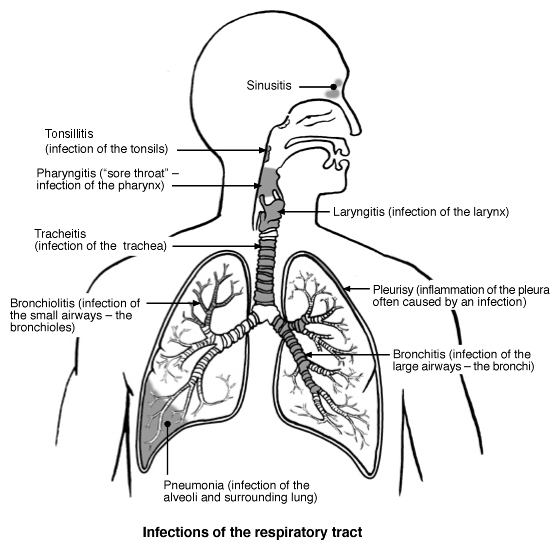
Read about التهاب الجيوب الأنفية, التهاب اللوزتين, pharyngitis, التهاب الحنجرة, tracheitis, التهاب الجنبة, التهاب الشعب الهوائية و الالتهاب الرئوي.
Sometimes an infection in the upper airways can spread deeper, causing a chest infection. Sometimes germs (bacteria) already living in your lungs can multiply, with the same result.
Types of a chest infection
There are two main types of chest infection - acute bronchitis and pneumonia.
التهاب الشعب الهوائية الحاد
Bronchitis is inflammation due to infection of the bronchi. '-itis' is the medical term for inflammation. It can be acute or chronic. Acute means lasting a short time and chronic means lasting a long time.
Acute bronchitis is common and is often due to a viral infection. Infection with a germ (bacterium) is a less common cause. See the separate leaflet called Acute bronchitis for more details.
الالتهاب الرئوي
This is usually a bacterial infection of the lung (bacterial chest infection) and may be serious. Treatment with antibiotics is usually needed. See the separate leaflet called Pneumonia for more details.
Chest infection recovery time
A bout of infection of the large airways (bronchi) in the lungs (acute bronchitis) usually gets better on its own within 7-10 days without any medicines. If you suspect that you have a severe infection of the lung (pneumonia), you should see a GP.
Are chest infections contagious?
You can pass a chest infection on to others through coughing and sneezing. So if you have a chest infection, it's important to cover your mouth when you cough or sneeze and to wash your hands regularly. You should throw away used tissues immediately.
Chest infection treatment
Although most chest infections are mild and improve on their own, some cases can be very serious, even life-threatening.
When to see a doctor?
Infection of the large airways (bronchi) in the lungs (acute bronchitis) usually gets better by itself, so there is often no need to see a GP. However, you should contact a GP if you feel very unwell, particularly if you are feeling breathless.
إذا كان لديك الربو أو مرض الانسداد الرئوي المزمن you should take your doctor's advice.
They may have given you recommendations about increasing your inhaler medication or taking a 'rescue pack' of antibiotics and steroid tablets at the first sign of an infection (much more common for those with COPD than asthma).
If not, speak with them for advice if you develop chest infection symptoms.
You should also speak with a doctor or arrange a face-to-face consultation if you have a weakened immune system as it is more likely that you will need antibiotic treatment.
Warning signs of a chest infection
There are a number of chest infection symptoms that mean you should see a GP even if you do not have any other lung problems. If your symptoms get worse, you should look out for these warning signs. They include:
If a fever, wheezing or headache becomes worse or severe.
If you develop fast breathing, shortness of breath, or chest pains.
If you cough up blood or if your phlegm becomes dark or rusty-coloured.
If you become drowsy or confused.
If a cough lasts for longer than 3-4 weeks.
If you have repeated bouts of acute bronchitis.
If any other symptom develops that you are concerned about.
Antibiotics for a chest infection
المضادات الحيوية are medicines used for infections caused by germs (bacteria) and don't work on viruses. Unless you have a long-term condition affecting your chest, your doctor is unlikely to prescribe antibiotics unless your symptoms and examination suggest you may have pneumonia.
Chest infection treatment at home
If you have a chest infection, you should:
Have plenty of rest.
Drink lots to prevent your body becoming lacking in fluids (dehydrated) and to help loosen the mucus in your lungs and make it easier to cough up.
Inhale steam vapour, perhaps with added menthol. Breathe in steam from a bowl of hot water - this can help to clear the mucus from your chest. Never use a bowl of hot water for a child's cough, in case they get scalded by accident; however, you could run a very hot bath to make the bathroom steamy and sit in the room with the child, safely away from the hot water.
Sleeping with an extra pillow to avoid lying flat at night to help keep your chest clear of mucus and make it easier to breathe.
Take الباراسيتامول, الإيبوبروفين أو الأسبرين to reduce high temperature and to ease any aches, pains and headaches. (ملاحظة: children aged less than 16 years should not take aspirin.)
You should try to التوقف عن التدخين for good if you smoke. Bronchitis, chest infections and serious lung diseases are more common in smokers as well as the long-term consequences such as lung disease, heart disease and cancer.
If your throat is sore from coughing, you can relieve the discomfort with a warm drink of honey and lemon.
What about cold and cough medicines for a chest infection?
You can buy many cold and flu remedies and cough medicines at pharmacies. These will help to make you feel better and help you to carry on with normal activities, but won't make the infection go away more quickly.
How is a chest infection diagnosed?
Your doctor will be able to make a diagnosis of a chest infection by listening to your story and examining you.
Often no tests are needed if you have infection of the large airways (bronchi) in the lungs (acute bronchitis) and your symptoms are mild. If your chest infection symptoms are more severe and you need to go to hospital then you may need to have the following tests:
ت الأشعة السينية للصدر may be taken to be sure of the diagnosis and to see how bad the infection is.
اختبارات الدم and phlegm (sputum) tests may be taken to find which germ (bacterium) is causing the serious lung infection (pneumonia). This helps to decide which antibiotic medicine is best to use. Sometimes the germ (bacterium) that is causing the pneumonia is resistant to the first antibiotic. A switch to another antibiotic is sometimes needed.
Are chest infections common?
Chest infections are very common, especially during the autumn and winter. They often occur after a زكام أو الإنفلونزا. Anyone can get a chest infection but they are more common in:
Young children and the elderly.
People who تدخن.
النساء الحوامل.
People with long-term chest problems such as الربو, مرض الانسداد الرئوي المزمن, التليف الكيسي, أمراض القلب, السكري, مرض الكلى أو مرض الكبد.
People with an immune system that's weakened either by conditions such as some cancers (including ليمفوما, ورم نخاعي و اللوكيميا) أو الإيدز; or by treatments such as high-dose الستيرويدات, العلاج الكيميائي or other medicines that can suppress your immune system.
How to prevent a chest infection
There are measures you can take to help prevent chest infections and to stop the spread of it to others. For instance, washing your hands regularly reduces the chance of germs getting into your system.
ما هي التوقعات؟
Infection of the large airways (bronchi) in the lungs (acute bronchitis) usually clears without any complications. Occasionally, the infection travels to the lung tissue to cause a serious lung infection (pneumonia).
If you have pneumonia and are well enough to be looked after at home, your outlook is very good. If you need to be looked after in hospital, the outlook is still usually good - but not quite as good. The outlook is also not as good for people who also have long-term illnesses such as lung disease, heart failure or diabetes.
اختيارات المرضى لـ التهابات الصدر

الصدر والرئتين
فيروسات سارس وميرس
متلازمة الالتهاب التنفسي الحاد الوخيم (سارس) ومتلازمة الشرق الأوسط التنفسية (ميرس) هما عدوى فيروسية. كلا العدويين يمكن أن يسببا أمراضًا خطيرة جدًا تؤثر بشكل خاص على الرئتين. تسببت سارس في العديد من الإصابات، خاصة في آسيا، في الفترة من 2002-2004 ولكن لم يُسمع عنها لفترة من الوقت. ظهر تفشي فيروس سارس-كوف-2 (كوفيد-19) في ووهان، الصين في ديسمبر 2019. انتشر هذا بسرعة وتم إعلانه جائحة عالمية في عام 2020. تم التعرف على ميرس لأول مرة في الشرق الأوسط في عام 2012. كانت معظم الإصابات الأولية في الشرق الأوسط. ومع ذلك، بحلول فبراير 2018، كانت منظمة الصحة العالمية (WHO) قد أبلغت عن حالات في العديد من البلدان الأخرى.
بقلم الدكتورة هايلي ويلاسي، FRCGP

الصدر والرئتين
السل
Tuberculosis (TB) is an infection with a germ (bacterium) called Mycobacterium tuberculosis. If you have symptoms, or a doctor can find signs of the infection when examining you, this is known as active tuberculosis. If you have TB infection without any signs or symptoms, this is known as latent TB.
بقلم الدكتور كولين تايدي، MRCGP
الأسئلة الشائعة
هل يمكن أن تتطور عدوى الصدر إلى شيء أكثر خطورة؟
نعم، عادةً ما يزول التهاب الشعب الهوائية الكبيرة (التهاب الشعب الهوائية الحاد) دون مضاعفات. ومع ذلك، في بعض الأحيان، يمكن أن ينتشر الالتهاب إلى أنسجة الرئة ويسبب عدوى رئوية أكثر خطورة مثل الالتهاب الرئوي.
كيف يمكنني منع تكرار عدوى الصدر؟
غسل يديك بانتظام يساعد في تقليل فرصة دخول الجراثيم إلى نظامك والمساهمة في التهابات الصدر. اتخاذ تدابير عامة للبقاء بصحة جيدة يمكن أن يكون مفيدًا أيضًا.
ماذا يجب أن أفعل إذا استمرت السعال لفترة طويلة جدًا؟
إذا استمرت السعال لديك لأكثر من 3-4 أسابيع، يجب عليك الاتصال بالطبيب للحصول على نصيحة. هذه واحدة من العلامات التحذيرية التي تشير إلى الحاجة لمراجعة طبية.
هل بعض الأشخاص أكثر عرضة للإصابة بعدوى صدرية شديدة تتطلب رعاية في المستشفى؟
نعم، إذا كنت مصابًا بالتهاب رئوي وكانت حالتك الصحية تتطلب دخول المستشفى، فإن التوقعات تكون جيدة بشكل عام ولكن ليست جيدة تمامًا مثل القدرة على التعافي في المنزل. كما أن التوقعات تكون أقل إيجابية للأفراد الذين يعانون من حالات طويلة الأمد متزامنة مثل أمراض الرئة أو فشل القلب أو السكري.
ما هي بعض العلاجات الطبيعية التي يمكنني استخدامها لتخفيف أعراض عدوى الصدر في المنزل؟
بالإضافة إلى الراحة وشرب الكثير من السوائل، يمكنك محاولة استنشاق البخار، ربما مع المنثول، للمساعدة في إزالة المخاط. النوم مع وسادة إضافية يمكن أن يساعد أيضًا في الحفاظ على صدرك واضحًا. يمكن لمشروب دافئ من العسل والليمون أن يهدئ التهاب الحلق الناجم عن السعال.
كيف أعرف إذا كنت مصابًا بالإنفلونزا أو عدوى في الصدر؟
غالبًا ما تحدث التهابات الصدر بعد الإصابة بنزلة برد أو الإنفلونزا. بينما تبدأ نزلة البرد عادةً بسيلان أو انسداد في الأنف والعطس، مع تطور السعال لاحقًا، يمكن أن تبدأ عدوى الصدر بأعراض مشابهة ولكن قد تشمل أيضًا صعوبات تنفسية أكثر وضوحًا، وألم في الصدر، وارتفاع في درجة الحرارة. إذا كنت تعاني من أعراض مثل التنفس السريع، أو ضيق التنفس، أو آلام في الصدر، يجب عليك زيارة طبيب عام، حيث قد تشير هذه الأعراض إلى وجود عدوى في الصدر.
قراءة إضافية ومراجع
- التهابات الصدر - للبالغين; NICE CKS، مايو 2024 (الوصول متاح فقط في المملكة المتحدة)
- Antibiotic awareness resources: key messages on antibiotic use; Public Health England (now UK Health Security Agency)
عن المؤلفعرض السيرة الذاتية الكاملة
تم التحديث بواسطة

الدكتور كولين تايدي، MRCGP
طبيب عام، مؤلف طبي
MBBS, MRCGP, MRCP (Paediatrics), DCH
الدكتور كولين تايدي هو طبيب في هيئة الخدمات الصحية الوطنية، ويعمل في أوكسفوردشاير.
كتبه
الدكتور كولين تايدي، MRCGP
طبيب عام، مؤلف طبي
MBBS, MRCGP, MRCP (Paediatrics), DCH
الدكتور كولين تايدي هو طبيب في هيئة الخدمات الصحية الوطنية، ويعمل في أوكسفوردشاير.
حول المراجععرض السيرة الذاتية الكاملة

Dr Toni Hazell, FRCGP
بكالوريوس الطب والجراحة، بكالوريوس العلوم، زميل الكلية الملكية للأطباء العامين، دبلوم في الصحة الجنسية والإنجابية، دبلوم في طب الجهاز البولي التناسلي، دبلوم الكلية الملكية لأطباء النساء والتوليد، دبلوم في صحة الطفل (لندن، المملكة المتحدة، 2000)
تخرجت الدكتورة توني هازيل من كلية الطب بمستشفى سانت ماري وأكملت تدريبها في مستشفى نورثويك بارك.
تاريخ المقال
المقال متاح أيضًا باللغة الإنجليزية, الألمانية, إسبانية, الفرنسية, إيطالي, البرتغالية, الهندية, العبرية, العربية ,، و السويدية.
Next review due: 5 Oct 2027
6 Oct 2024 | أحدث إصدار
7 May 2013 | نُشر في الأصل
كتبه:
الدكتور كولين تايدي، MRCGP
انضم إلى المحادثة
شارك أفكارك أو تجاربك مع الآخرين في مجتمعات المرضى.

اسأل، شارك، تواصل.
تصفح المناقشات، اطرح الأسئلة، وشارك التجارب عبر مئات المواضيع الصحية.

هل تشعر بتوعك؟
قم بتقييم أعراضك عبر الإنترنت مجانًا
اشترك في النشرة الإخبارية للمرضى
جرعتك الأسبوعية من النصائح الصحية الواضحة والموثوقة - مكتوبة لمساعدتك على الشعور بالاطلاع والثقة والتحكم.
من خلال الاشتراك، فإنك تقبل سياسة الخصوصية. يمكنك إلغاء الاشتراك في أي وقت. نحن لا نبيع بياناتك أبدًا.