التهاب المسالك البولية عند الأطفال
مراجعة من قبل الدكتور كريشنا فاخاريا، MRCGPآخر تحديث بواسطة الدكتور كولين تايدي، MRCGPآخر تحديث ٢٦ أغسطس ٢٠٢٢
يتوافق مع الإرشادات التحريرية
- تنزيلتنزيل
- مشاركة
- Language
- نقاش
- نسخة صوتية
- أضف إلى المصادر المفضلة على جوجل
التهاب المسالك البولية عند الأطفال شائع. يمكن أن يسبب أعراضًا مختلفة. عادةً ما يؤدي تناول دورة من الأدوية تسمى المضادات الحيوية إلى التخلص من العدوى بسرعة. في معظم الحالات، يتعافى الطفل المصاب بعدوى المسالك البولية بشكل كامل. في بعض الأحيان، يُنصح بإجراء اختبارات لفحص الكلى و/أو المثانة بعد زوال العدوى. سيقوم طبيبك بتقديم المشورة إذا كان طفلك بحاجة إلى هذه الاختبارات. يعتمد ذلك على عمر طفلك، وشدة العدوى، وما إذا كانت قد حدثت من قبل.
نظرة سريعة
A urine infection in children is caused by germs that get into the urine.
Symptoms in young children include fever, vomiting, drowsiness, or appearing unwell.
Older children may have painful or frequent urination, or tummy/back pain.
A urine sample confirms the diagnosis, and antibiotics usually clear the infection.
Give the child plenty to drink and paracetamol for pain or fever.
Seek medical help if you suspect your child has a urine infection.
Prevent future infections by preventing constipation and ensuring good hygiene.
ما هو التهاب المسالك البولية عند الأطفال؟
الجهاز البولي
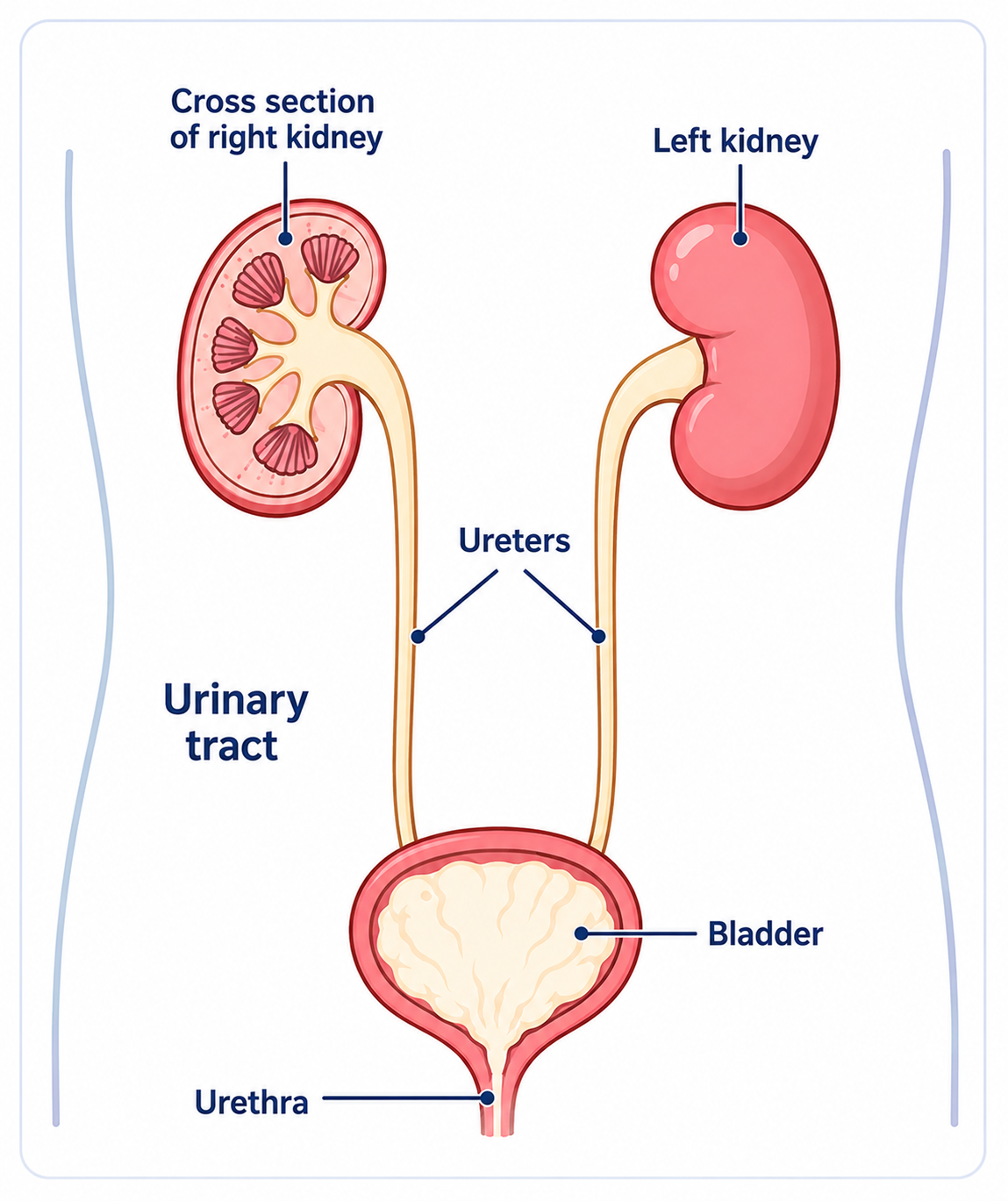
تحدث عدوى البول بسبب الجراثيم (البكتيريا) التي تدخل إلى البول. معظم عدوى البول ناتجة عن البكتيريا التي تعيش عادة في الأمعاء. لا تسبب أي ضرر في الأمعاء ولكن يمكن أن تسبب العدوى إذا دخلت إلى أجزاء أخرى من الجسم. بعض البكتيريا تتواجد حول الممر الخلفي (الشرج) بعد تمرير البراز. يمكن لهذه البكتيريا أحيانًا أن تنتقل إلى الإحليل (الأنبوب الذي يمرر البول من المثانة) وإلى المثانة. بعض البكتيريا تزدهر في البول وتتكاثر بسرعة لتسبب العدوى.
عادةً ما تكون العدوى فقط في المثانة (عندما تُسمى التهاب المثانة) ولكنها قد تنتقل إلى الأعلى لتؤثر على إحدى الكليتين أو كلتيهما أيضًا.
فهم الجهاز البولي
يوجد كليتان، واحدة على كل جانب من البطن. تقومان بإنتاج البول الذي يتدفق عبر أنابيب تسمى الحالبين إلى المثانة. يتم تخزين البول في المثانة ويتم إخراجه عبر أنبوب من المثانة (الإحليل) من وقت لآخر عندما نذهب إلى المرحاض.
أعراض التهاب المسالك البولية عند الأطفال
قد يكون من الصعب معرفة ما إذا كان الطفل يعاني من عدوى في البول. إذا كانوا صغارًا جدًا، فقد لا يتمكنون من إخبارك بمكان المشكلة. إذا كانوا لا يزالون يرتدون الحفاضات، فقد لا تلاحظ أنهم يتبولون بشكل متكرر.
يمكن للأطفال الصغار والرضع أن يعانوا من أعراض متنوعة قد تشمل واحدًا أو أكثر مما يلي:
نعاس.
البكاء، الامتناع عن الطعام، وبشكل عام يبدو غير مريح.
يبدو أنه يعاني من الألم.
دم في البول (غير شائع).
بول غائم أو ذو رائحة كريهة.
قد يقول الأطفال الأكبر سنًا إنهم يشعرون بألم عند التبول، ويتبولون بشكل متكرر. إذا أصيبت الكلية بالعدوى، فقد يشعرون أيضًا بالقشعريرة ويشتكون من ألم في البطن (البطن)، أو ألم في الظهر، أو ألم في جانب من البطن. قد يكون التبول اللاإرادي لدى الطفل الذي كان جافًا سابقًا بسبب عدوى بولية لدى الأطفال. قد يكون الشعور العام بالتوعك بسبب عدوى بولية.
ملاحظة: يجب الاشتباه في وجود عدوى بولية لدى أي طفل يشعر بالتوعك أو يعاني من حمى دون سبب واضح آخر. لهذا السبب يتم إجراء اختبار البول بشكل شائع عندما يكون الطفل مريضًا. من المهم تشخيص وعلاج العدوى البولية لدى الأطفال بسرعة.
كيف يتم تأكيد عدوى البول عند الأطفال؟
ت عينة من البول هناك حاجة لتأكيد التشخيص. عادةً لا يحتوي البول على جراثيم (بكتيريا) أو يحتوي على عدد قليل جدًا منها. يمكن تأكيد عدوى البول عند الأطفال من خلال اختبارات البول التي تكشف عن البكتيريا و/أو آثار العدوى في البول.
من الناحية المثالية، يجب ألا يتلامس عينة البول مع الجلد أو مواد أخرى قد تلوثها ببكتيريا أخرى. يمكن للبالغين والأطفال الأكبر سناً القيام بذلك عن طريق جمع البول في منتصف التدفق. هذا ليس سهلاً في الأطفال الصغار والرضع. فيما يلي طرق للحصول على عينة بول غير ملوثة:
الأطفال الصغار - الطريقة المعتادة هي جمع بعض البول في زجاجة العينة أثناء التبول. كن مستعدًا بالزجاجة المفتوحة عندما يبدأ الطفل بالتبول. (احرص على عدم لمس حافة الزجاجة المفتوحة بأصابعك، حيث قد يؤدي ذلك إلى تلوث العينة بالبكتيريا من أصابعك.)
أطفال - إحدى الطرق هي وضع وسادة ماصة مصممة خصيصًا في الحفاض (يتم توفيرها من قبل الطبيب). يتم سحب البول إلى محقنة من الوسادة المبللة. طريقة أخرى هي استخدام كيس بلاستيكي يلتصق بالجلد ويجمع البول. إذا لم تكن هناك وسادة أو كيس بلاستيكي متاح، فقد تنجح الطريقة التالية. قم بإزالة الحفاض بعد حوالي ساعة من الرضاعة. يساعد المسح اللطيف للجلد فوق منطقة العانة باستخدام شاش مبلل بالماء البارد في تحفيز التبول.
إذا قمت بجمع عينة في المنزل، خذها إلى الطبيب أو العيادة في أسرع وقت ممكن بعد جمعها. إذا كان هناك تأخير، قم بتخزين عينة البول في الثلاجة.
إذا لم تتمكن من الحصول على عينة بالطرق المذكورة أعلاه، فهناك طرق أخرى للحصول على واحدة. هذه الطرق أكثر إزعاجًا قليلاً وعادة ما تُجرى في المستشفى. يمكن للطبيب إدخال أنبوب رفيع ومرن وجوف يسمى قسطرة في المثانة للحصول على العينة. ثم يتم إخراج الأنبوب فورًا. بدلاً من ذلك، يمكن للطبيب أيضًا استخدام إبرة معقمة لأخذ عينة مباشرة من المثانة، عن طريق المرور عبر الجلد فوق عظم العانة مباشرة. يتم استخدام مخدر موضعي لتجنب إيذاء الطفل.
علاج التهاب المسالك البولية عند الأطفال
دورة تدريبية لـ دواء مضاد حيوي عادةً ما يتم التخلص من العدوى في غضون بضعة أيام. اعتمادًا على مكان العدوى ومدى شدتها، قد تكون المضادات الحيوية دورة علاجية لمدة ثلاثة أيام إلى عشرة أيام.
أحيانًا، بالنسبة للأطفال الرضع جدًا أو في حالات العدوى الشديدة في المستشفى، تُعطى المضادات الحيوية مباشرة في الوريد عبر التنقيط.
أعط الكثير من السوائل لمنع نقص السوائل في الجسم (الجفاف). أيضًا، أعط الباراسيتامول إذا لزم الأمر لتخفيف أي آلام وارتفاع في درجة الحرارة (الحمى).
ما مدى شيوع عدوى البول عند الأطفال؟
حوالي 1 من كل 30 ولدًا و1 من كل 10 فتيات يصابون بعدوى بولية واحدة على الأقل بحلول الوقت الذي يبلغون فيه 16 عامًا.
بعض المصطلحات التي يستخدمها الأطباء تشمل:
التهاب المسالك البولية (UTI) - مما يعني وجود عدوى بولية في مكان ما في المسالك البولية.
التهاب المثانة - والذي يعني عدوى أو التهاب في المثانة.
التهاب المسالك البولية السفلي - مما يعني أن العدوى تقتصر على المثانة والإحليل. هذا يشبه إلى حد كبير التهاب المثانة.
التهاب المسالك البولية العلوي - يؤثر الالتهاب على الكلية و/أو الأنبوب الذي يسمى الحالب.
التهاب الحويضة والكلية - مصطلح يعني التهاب الكلى.
ألم الخاصرة - وهو ألم في جانب واحد من الظهر، وغالبًا ما يأتي من الكلية.
هل هناك أي شيء يزيد من خطر الإصابة بعدوى البول لدى الأطفال؟
في معظم الحالات
لا. في معظم حالات التهابات البول عند الأطفال، لا يوجد مشكلة أساسية تفسر ذلك.
في بعض الحالات
قد يلعب احتباس بعض البول في المسالك البولية دورًا في ذلك. عندما نتبول، يجب أن تفرغ المثانة تمامًا. هذا يساعد في طرد أي جراثيم (بكتيريا) قد تكون دخلت المثانة منذ آخر زيارة للحمام. ومع ذلك، يمكن لبعض التشوهات أو المشاكل التي تؤثر على المسالك البولية أن تجعل بعض البول يبقى (يحتجز) في المثانة أو الكلى أو أنابيب البول. قد يسمح هذا لأي بكتيريا بالتكاثر، حيث يعتبر البول غذاءً جيدًا لبعض البكتيريا. هذا يزيد من فرصة الإصابة بعدوى البول لدى الأطفال. فيما يلي الأسباب الأكثر شيوعًا لاحتباس البول.
الإمساك - إذا تجمعت البراز الصلبة الكبيرة في الممر الخلفي (الشرج) فقد تضغط على المثانة. قد لا تفرغ المثانة بالكامل عندما يتبول الطفل. علاج الحالات الشديدة الإمساك أحيانًا يمنع التهابات المسالك البولية المتكررة لدى الأطفال.
متلازمة الإقصاء الوظيفي - هذه حالة حيث يحتفظ الطفل بالبول و/أو البراز بشكل متكرر. أي أنهم لا يفرغون مثانتهم أو أمعائهم بالكامل بانتظام عند الذهاب إلى المرحاض. لا يوجد سبب جسدي لهذا (أي لا يوجد خلل في المسالك البولية أو المستقيم). السبب وراء حدوث ذلك غالبًا غير واضح. قد يكون التوتر أو المشاكل العاطفية السبب الكامن وراء ذلك.
شذوذ في الجهاز البولي - يمكن أن تسبب التشوهات الهيكلية احتباس البول. الحالة الأكثر شيوعًا تُسمى الارتجاع المثاني الحالبي. هذه مشكلة هيكلية عند التقاطع حيث يدخل أنبوب الحالب إلى المثانة. في هذه الحالة، يتم ارتجاع البول إلى أعلى الحالب من المثانة من وقت لآخر. لا ينبغي أن يحدث هذا. يجب أن يتدفق البول فقط إلى الأسفل خارج المثانة عند الذهاب إلى المرحاض.
تجعل هذه الحالة التهابات البول عند الأطفال أكثر احتمالاً. قد يتسبب البول المصاب الذي يرتد من المثانة إلى الكلى أيضًا في حدوث عدوى في الكلى وتندب وتلف. في بعض الحالات، يؤدي ذلك إلى تلف شديد في الكلى إذا تكررت التهابات البول بشكل متكرر. تشمل المشاكل النادرة الأخرى التي قد توجد حصى الكلى ,، أو تشوهات نادرة في أجزاء من الجهاز البولي.
اضطرابات الأعصاب (العصبية) أو الحبل الشوكي - أي شيء يؤثر على إفراغ المثانة أو الإحساس بها. هذه الحالات نادرة عند الأطفال.
حالات أخرى
حالات أخرى تزيد من خطر الإصابة بعدوى المسالك البولية تشمل السكري ووجود جهاز مناعي يعمل بشكل سيء. على سبيل المثال،, الأطفال الذين يتلقون العلاج الكيميائي قد يكون لديهم جهاز مناعي أقل فعالية.
ما هي التوقعات (التشخيص)؟
في معظم الحالات، هذا ممتاز. بمجرد تشخيص عدوى البول لدى الطفل وعلاجها، عادة ما تزول العدوى ويتعافى الطفل تمامًا. في كثير من الحالات، تكون عدوى البول حدثًا لمرة واحدة. ومع ذلك، يعاني بعض الأطفال من أكثر من عدوى بول واحدة ويطور البعض عدة عدوى طوال فترة طفولتهم (التهابات المسالك البولية المتكررة).
في بعض الحالات، يمكن أن تكون التهابات البول عند الأطفال شديدة، خاصة إذا أصيبت الكلى بشكل سيء. يمكن أن يكون هذا خطيرًا في بعض الأحيان، وحتى مهددًا للحياة في عدد قليل من الحالات إذا تأخر العلاج. قد يتسبب التهاب شديد، أو التهابات متكررة، في الكلى في حدوث ضرر دائم للكلى. قد يؤدي ذلك إلى مشاكل في الكلى أو ارتفاع ضغط الدم في وقت لاحق من الحياة.
متى يُنصح بإجراء اختبارات إضافية؟
التهاب المسالك البولية عند الأطفال شائع. في معظم الحالات، يتعافى الطفل المصاب بالتهاب المسالك البولية بشكل كامل.
يُنصح بإجراء الفحوصات في بعض الحالات للتحقق من الكلى و/أو المثانة. سيقوم طبيبك بتقديم المشورة إذا كان طفلك بحاجة إلى مزيد من الفحوصات. يعتمد ذلك على عوامل مثل عمر الطفل، وشدة العدوى، وما إذا كانت قد حدثت من قبل. على سبيل المثال:
الأطفال الذين تزيد أعمارهم عن 6 أشهر والذين يعانون من عدوى بولية لمرة واحدة وتختفي بسرعة مع العلاج لا يحتاجون عادةً إلى أي اختبارات إضافية.
قد يحتاج الأطفال المصابون بعدوى شديدة، أو بعدوى ذات خصائص غير عادية، إلى إجراء اختبارات.
قد يحتاج الأطفال الذين يعانون من عدوى أو أكثر من أي شدة إلى إجراء اختبارات.
قد تختلف الفحوصات الموصى بها حسب السياسات المحلية وعمر الطفل. هناك العديد من الفحوصات (مثل الأشعة، إلخ) التي يمكن استخدامها. هذه الفحوصات تهدف إلى التحقق من بنية ووظيفة الجهاز البولي (الكلى، المثانة والأنابيب التي تحمل البول).
نتائج الاختبارات طبيعية في معظم الحالات. ومع ذلك، في بعض الحالات، قد يتم اكتشاف شذوذ مثل الارتجاع المثاني الحالبي (الموصوف أعلاه). بناءً على ما إذا تم اكتشاف شذوذ، ومدى شدته، قد ينصح أخصائي الكلى بجرعة منخفضة يومية منتظمة من دواء مضاد حيوي. يُنصح بهذا العلاج في بعض الحالات لمنع المزيد من التهابات البول، بهدف منع تلف الكلى.
ملاحظة: تم وضع القواعد العامة لتحديد الأطفال الذين يجب أن يخضعوا لمزيد من الفحوصات بعد الإصابة بعدوى بولية في إنجلترا وويلز وفقًا للإرشادات الصادرة عن المعهد الوطني للصحة والرعاية المتميزة (NICE). قد تختلف الإرشادات في بلدان أخرى. انظر الرابط إلى إرشادات NICE في قسم القراءة الإضافية أدناه.
نصائح عامة بعد الإصابة بعدوى بولية لدى الطفل
للمساعدة في منع حدوث عدوى أخرى في المستقبل:
حاول ألا تدع طفلك يصبح مصاب بالإمساك. سيساعدك النظام الغذائي الجيد هنا. اطلب نصيحة طبيبك حول هذا الأمر إذا لم تكن متأكدًا من الأطعمة الأفضل لمنع الإمساك.
تأكد من أن طفلك يشرب كمية كافية كل يوم.
تأكد من أن طفلك نظيف بعد الذهاب إلى الحمام، وعلمه كيفية القيام بذلك عندما يكون كبيرًا بما يكفي للذهاب إلى الحمام بمفرده.
تأكد من أن طفلك يستطيع الذهاب إلى الحمام فورًا عند الحاجة؛ شجعه على القيام بذلك. قد تحتاج إلى إبلاغ معلم الحضانة/المدرسة بأن طفلك قد أصيب بعدوى في المسالك البولية.
أيضًا، استشر الطبيب فورًا إذا كنت تشك في أن طفلك يعاني من عدوى بولية أخرى. إذا تم تأكيد ذلك، ذكر طبيبك بأن طفلك قد أصيب بعدوى بولية سابقة. قد يُنصح بإجراء اختبارات إضافية.
اختيارات المرضى لـ العدوى في مرحلة الطفولة

صحة الأطفال
الخناق
الخناق هو عدوى تصيب صندوق الصوت (الحنجرة) والقصبة الهوائية (الرغامي). هذه هي الأجزاء العلوية والسفلية من أنبوب التنفس الذي يربط الفم بأعلى الرئتين. السبب المعتاد للخناق هو عدوى فيروسية.
بقلم الدكتورة توني هازيل، FRCGP
صحة الأطفال
السعال ونزلات البرد عند الأطفال
عادة ما تسبب العدوى بجرثومة تسمى فيروس السعال ونزلات البرد. عادة ما تختفي من تلقاء نفسها. الأدوية المضادة للجراثيم لا تساعد، ويمكن أن تسبب أضرارًا مثل الإسهال والقيء. قد يخفف الباراسيتامول أو الإيبوبروفين بعض الأعراض. تأكد من أن الطفل يشرب كمية كافية من السوائل.
بقلم الدكتور دوغ مكيتشني، MRCGP
الأسئلة الشائعة
What is the difference between an upper and a lower urine infection?
A lower urine infection, also known as cystitis, means the infection is limited to the bladder and the urethra (the tube carrying urine out of the body). An upper urine infection, on the other hand, means the infection has travelled higher up to affect a kidney and/or the ureters (the tubes connecting the kidneys to the bladder). When a kidney is infected, it's called pyelonephritis.
If my child has had one urine infection, are they more likely to get another?
While many children experience a urine infection as a one-off event and recover fully, some children do have more than one infection. Recurring infections, particularly if they affect the kidneys, can sometimes lead to kidney damage or high blood pressure later in life. If your child has had a previous urine infection and you suspect another, it's important to tell your doctor as further tests or preventative measures might be considered.
Why do girls get urine infections more often than boys?
Around 1 in 10 girls will have at least one urine infection by the age of 16, compared to about 1 in 30 boys. The article does not directly explain why girls are more commonly affected, but it is a recognised pattern that often relates to anatomical differences in the urinary tract.
Can food or diet help prevent urine infections in children?
A good diet can help prevent constipation, which in turn can reduce the risk of urine infections. If severe constipation is treated, it can sometimes prevent recurring infections. It's recommended to ask your doctor for advice on the best foods to prevent constipation if you are unsure.
What should I do if my child needs to go to the toilet urgently at nursery or school, especially after having a urine infection?
It's important to make sure your child can go to the toilet promptly when they need to and encourage them to do so. You may need to inform their nursery or school teacher that your child has had a urine infection so they are aware and can accommodate your child’s needs.
Are there any specific cleaning techniques after using the toilet that can help prevent urine infections?
Yes, it’s important to make sure your child is clean after going to the toilet. As they get older, you should teach them how to clean themselves properly when they are able to go to the toilet alone.
قراءة إضافية ومراجع
- Williams G, Craig JC; المضادات الحيوية طويلة الأمد للوقاية من عدوى المسالك البولية المتكررة لدى الأطفال. قاعدة بيانات كوكرين للمراجعات المنهجية. 1 أبريل 2019;4:CD001534. doi: 10.1002/14651858.CD001534.pub4.
- عدوى المسالك البولية لدى الأطفال دون سن 16: التشخيص والإدارة; إرشادات NICE (يوليو 2022)
- عدوى المسالك البولية - الأطفال; NICE CKS، أبريل 2024 (الوصول متاح فقط في المملكة المتحدة)
- Leung AKC, Wong AHC, Leung AAM, et al; عدوى المسالك البولية لدى الأطفال. Recent Pat Inflamm Allergy Drug Discov. 2019;13(1):2-18. doi: 10.2174/1872213X13666181228154940.
- 't Hoen LA, Bogaert G, Radmayr C, et al; تحديث إرشادات EAU/ESPU حول التهابات المسالك البولية لدى الأطفال. J Pediatr Urol. 2021 Apr;17(2):200-207. doi: 10.1016/j.jpurol.2021.01.037. Epub 2021 Feb 2.
عن المؤلفعرض السيرة الذاتية الكاملة

الدكتور كولين تايدي، MRCGP
طبيب عام، مؤلف طبي
MBBS, MRCGP, MRCP (Paediatrics), DCH
الدكتور كولين تايدي هو طبيب في هيئة الخدمات الصحية الوطنية، ويعمل في أوكسفوردشاير.
حول المراجععرض السيرة الذاتية الكاملة

الدكتور كريشنا فاخاريا، MRCGP
كبير المسؤولين الطبيين للصحة، أوبتوم المملكة المتحدة
MBChB, MRCGP(2013), BMedSci (hons), DFSRH, DRCOG, PGDipDerm (Distn)
الدكتورة كريشنا فاخاريا هي طبيبة عامة في هيئة الخدمات الصحية الوطنية. كما أنها ممتحنة منتظمة لدبلوم الدراسات العليا في الأمراض الجلدية العملية في جامعة كارديف، بالإضافة إلى كونها كبيرة المسؤولين الطبيين للصحة في Optum UK.
تاريخ المقال
تمت كتابة المعلومات على هذه الصفحة ومراجعتها من قبل أطباء مؤهلين.
المقال متاح أيضًا باللغة الإنجليزية, الألمانية, إسبانية, الفرنسية, إيطالي, البرتغالية, الهندية, العبرية, العربية ,، و السويدية.
المراجعة التالية مستحقة: 25 أغسطس 2027
٢٦ أغسطس ٢٠٢٢ | أحدث إصدار

اسأل، شارك، تواصل.
تصفح المناقشات، اطرح الأسئلة، وشارك التجارب عبر مئات المواضيع الصحية.

هل تشعر بتوعك؟
قم بتقييم أعراضك عبر الإنترنت مجانًا
اشترك في النشرة الإخبارية للمرضى
جرعتك الأسبوعية من النصائح الصحية الواضحة والموثوقة - مكتوبة لمساعدتك على الشعور بالاطلاع والثقة والتحكم.
من خلال الاشتراك، فإنك تقبل سياسة الخصوصية. يمكنك إلغاء الاشتراك في أي وقت. نحن لا نبيع بياناتك أبدًا.